You may wonder how many snow days are allowed in Michigan and what really happens when winter weather forces schools to close. Michigan has clear statewide rules that balance student safety with required instructional time, and those rules affect families every winter. Understanding how snow days work helps you plan childcare, anticipate calendar changes, and know what to expect if closures add up.
Michigan law allows a limited number of snow days each school year, with options for waivers and makeup days when winter is especially harsh. The rules apply statewide, but districts still make local decisions based on conditions. This guide explains everything you need to know so you are never caught off guard.
How Michigan Defines a Snow Day
A snow day in Michigan refers to a full cancellation of in-person instruction due to weather or emergency conditions. You should know that snow days typically occur during winter storms, extreme cold, or unsafe road conditions that prevent safe transportation. These days are formally classified as instructional cancellations under state law.
Michigan does not limit snow days only to snowfall, because ice, wind chill, or power outages can also justify closures. When a district cancels school entirely, that day may count toward the state’s allowed forgiven days. Partial days or delays usually do not count as snow days because instruction still takes place.
The Standard Number of Snow Days Allowed in Michigan
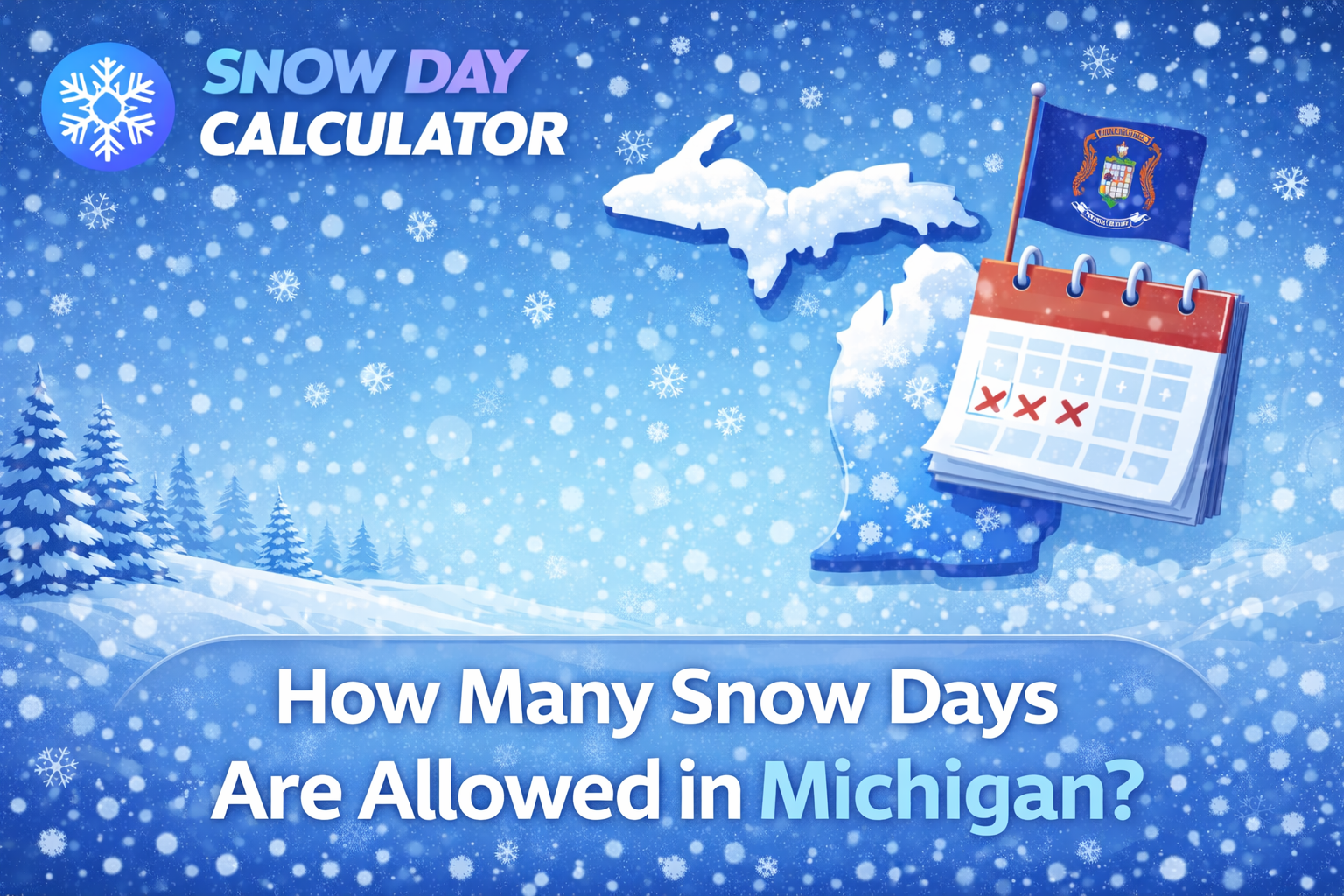
Michigan allows you to rely on up to six forgiven snow days each school year without making them up. These six days can count toward required instructional time even though classes do not meet. This rule applies to all public school districts across the state.
Once those six days are used, the district must look at alternatives such as waivers or makeup days. The state created this limit to balance unpredictable winter weather with consistent learning schedules. For most years, six snow days are enough, but severe winters can push districts beyond that threshold.
Many parents also track closures closely using tools like checking will I have a snow day tomorrow to prepare for sudden changes. These resources help you stay informed, but the official count always comes from the district calendar.
Instructional Time Requirements Under Michigan Law
Michigan requires schools to meet minimum instructional standards every year. You should know that districts must provide at least 1,098 instructional hours or 180 instructional days annually. Snow days reduce actual classroom time, which is why forgiven limits exist.
The state measures compliance using hours rather than calendar days for most districts. When snow days occur, forgiven days still count toward those totals. Any time beyond the forgiven limit must be recovered to meet legal requirements.
What Happens After Schools Use All Six Snow Days
When your district uses all six allowed snow days, administrators must decide how to handle additional closures. The first option is applying for a waiver from the state superintendent. This waiver can forgive additional days without requiring makeup time.
If no waiver is granted, the district must reschedule lost instructional time. That usually means adding days to the end of the school year or shortening scheduled breaks. This is why some school years extend into late June after heavy winter storms.
Michigan’s Snow Day Waiver Process Explained
Michigan allows districts to request up to three additional forgiven snow days through a waiver process. You should understand that these waivers are not automatic and must be approved by the state superintendent. Districts must demonstrate unusual or severe conditions.
Waivers are typically granted during winters with widespread storms or prolonged closures. The goal is to prevent excessive calendar extensions when weather is clearly beyond local control. Even with waivers, there is still a limit, which keeps instructional standards consistent statewide.
How Local Districts Decide to Close Schools
Snow day decisions are made locally by each district superintendent. You should know that factors include road safety, bus routes, weather forecasts, and building conditions. This is why neighboring districts may close on different days.
Local geography plays a major role in these decisions. Lake-effect snow, rural road conditions, and staffing availability all affect closures. Understanding this helps you see why snow day announcements sometimes feel inconsistent.
Parents often ask how many inches of snow for school to be cancelled, but there is no single statewide threshold. Decisions are based on safety, not just snowfall totals.
Do Delays and Half Days Count as Snow Days
Delayed starts and early dismissals usually do not count as snow days in Michigan. You should know that as long as some instruction occurs, the day typically counts toward instructional requirements. This allows districts to remain flexible during marginal weather.
Full cancellations are the primary concern when tracking snow day limits. Delays help districts avoid using forgiven days unnecessarily. This approach helps preserve snow days for truly dangerous conditions.
The Role of Virtual and E-Learning Days
Some Michigan districts use virtual or e-learning days during winter weather. You should understand that approved virtual instruction days do not count as snow days if students receive instructional content. These days help districts avoid calendar extensions.
Not all districts have e-learning approval, which creates differences statewide. Where available, virtual days provide continuity and flexibility. They are increasingly common as technology improves and weather patterns become less predictable.
How Snow Days Affect the School Calendar
Snow days directly impact the academic calendar when limits are exceeded. You may see spring breaks shortened or the school year extended into summer. These adjustments ensure districts meet state instructional requirements.
Calendar changes can affect family plans, childcare, and summer activities. That is why districts try to minimize makeup days when possible. Understanding the system helps you plan ahead during heavy winter seasons.
Why Michigan Snow Day Rules Matter to Families
Michigan’s snow day rules exist to protect student safety while maintaining educational quality. You benefit from clear limits that prevent excessive disruptions while allowing flexibility during severe weather. These policies aim to balance safety, learning, and fairness.
By understanding how many snow days are allowed in Michigan, you can better anticipate school closures. This knowledge helps you stay prepared and informed throughout the winter months.
Conclusion
Knowing how many snow days are allowed in Michigan helps you plan your family schedule with confidence during winter. Michigan allows six forgiven snow days each year, with the possibility of up to three additional days through state-approved waivers. Once those limits are reached, districts must make up lost instructional time to meet legal requirements.
Snow day decisions are made locally, but the rules are set at the state level to ensure consistency. Understanding these policies helps you avoid confusion when closures stack up. With this knowledge, you can better prepare for Michigan winters and their impact on school calendars.
FAQs
How many snow days are allowed in Michigan schools each year
Michigan allows six forgiven snow days per school year that count toward instructional requirements. These days do not need to be made up later. If closures exceed six days, districts must seek waivers or schedule makeup days to remain compliant.
Can Michigan schools get more than six snow days
Yes, Michigan schools can request up to three additional forgiven snow days through a state waiver. Approval depends on severe or unusual weather conditions. These extra days are not automatic and must be justified by documented circumstances affecting student safety.
What happens if schools exceed all allowed snow days
If a district exceeds allowed snow days and does not receive a waiver, it must make up lost instructional time. This often means extending the school year, shortening scheduled breaks, or adding extra days to meet state instructional requirements.
Do delayed starts or early dismissals count as snow days
Delayed starts and early dismissals usually do not count as snow days in Michigan. As long as students receive instructional time during the day, the district can count it toward annual requirements, preserving forgiven snow days for full closures only.
Are virtual or e-learning days considered snow days
Approved virtual or e-learning days do not count as snow days if students receive instruction. These days help districts avoid using forgiven snow days and prevent calendar extensions, but only districts with state approval can use this option legally.
Who decides when a Michigan school closes for snow
Each Michigan school district superintendent makes local closure decisions. Factors include road safety, weather forecasts, bus routes, staffing availability, and building conditions. This local authority explains why nearby districts sometimes close on different days during the same storm.
Is there a specific snowfall amount that triggers school closures
Michigan does not use a statewide snowfall threshold for closures. Decisions depend on overall safety, including ice, wind chill, visibility, and road conditions. Even small snowfall amounts can cause closures if conditions make travel unsafe for students and staff.
How do snow days affect the end of the school year
Snow days can push the school year later if districts exceed forgiven limits. Makeup days may be added in late spring or early summer, sometimes extending the calendar into late June to meet Michigan instructional time requirements.
Do snow days reduce required instructional hours in Michigan
Forgiven snow days still count toward Michigan’s required 1,098 instructional hours or 180 days. However, once forgiven limits are exceeded, districts must recover lost hours through makeup days to remain legally compliant with state education laws.
Why are Michigan snow day rules important for parents
Michigan snow day rules help you anticipate closures, childcare needs, and potential calendar changes. Knowing the limits allows you to plan ahead during winter, understand district decisions, and avoid surprises when severe weather affects school schedules.