You often hear that snow only falls when temperatures drop below freezing, but the reality is far more nuanced and scientifically fascinating. When you understand what temperature it needs to be to snow, you begin to see how moisture, altitude, and atmospheric layers work together to create snowfall across the United States.
This guide explains the exact temperatures involved, why snow can fall above 32°F, and how regional weather patterns shape snowfall outcomes, helping you interpret winter forecasts with clarity and confidence.
The Basic Temperature Requirement for Snow Formation
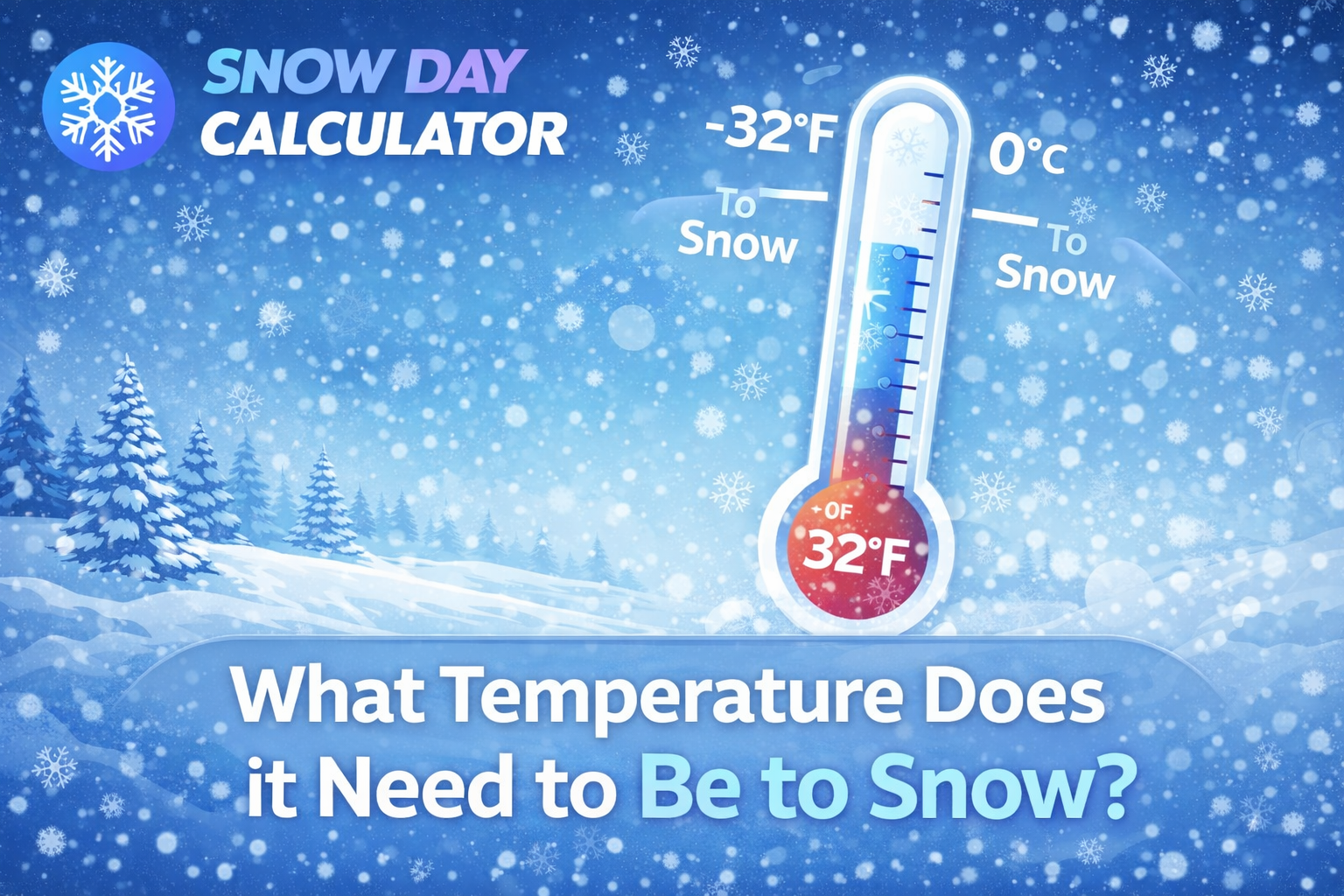
You need temperatures at or below 32°F or 0°C in the atmosphere for snow crystals to form in clouds. Snow begins its life high above the ground where moisture freezes into ice crystals that grow as they collide with supercooled water droplets. If these crystals remain frozen on their descent, they reach the ground as snow rather than rain.
You should understand that surface temperature alone does not determine snowfall. Snow often forms thousands of feet above you where temperatures are much colder than at ground level. This explains why snow can fall even when your local thermometer reads slightly above freezing.
Why Snow Can Fall Above 32°F
You may be surprised to see snow falling when the temperature reads 34°F or even 36°F. This happens when the air layer between the clouds and the ground stays cold enough to prevent complete melting of snowflakes. If the warm layer is shallow, snowflakes partially melt but refreeze before hitting the surface.
You should also note that snowfall intensity matters. Heavy snow falls faster, giving flakes less time to melt as they pass through warmer air. This is why you sometimes experience slushy snow during early or late winter storms.
The Role of Moisture in Snowfall
You cannot have snow without moisture, regardless of how cold it gets. Cold air holds less water vapor, which is why extremely cold regions often receive light snowfall rather than heavy storms. Moisture-rich air combined with cold temperatures creates the ideal conditions for significant snow accumulation.
You can see this clearly in regions affected by large bodies of water, where evaporation fuels snowfall. If you want to understand how localized moisture dramatically increases snowfall totals, learning about lake-effect snow explained provides valuable insight into why some areas receive feet of snow while nearby regions stay relatively dry.
Atmospheric Layers and Vertical Temperature Profiles
You experience snow based on the temperature profile from cloud level to ground level, not just the surface reading. Meteorologists analyze vertical temperature layers to determine whether precipitation falls as snow, sleet, freezing rain, or rain. A continuous subfreezing column favors snow reaching the ground intact.
You should know that even a thin warm layer can change snow into rain. This complexity is why forecasts sometimes shift rapidly as small temperature changes occur. Understanding these layers helps you better interpret winter weather alerts.
Altitude and Its Impact on Snowfall Temperature
You are more likely to see snow at higher elevations because temperatures decrease with altitude. Mountains experience colder air and more frequent snowfall even when nearby valleys see rain. This temperature drop occurs at roughly 3.5°F per 1,000 feet of elevation gain.
You can use this knowledge to anticipate snowfall when traveling. Ski resorts rely on altitude-driven cold air to maintain snowpack even during warmer periods. Elevation plays a critical role in snowfall consistency across the United States.
Snowfall Differences Across U.S. Regions
You experience snowfall differently depending on where you live in the United States. Northern states often see snow at lower surface temperatures, while southern states require stronger cold fronts to produce snow. Regional climate patterns shape how often and how intensely snow occurs.
You can see this contrast clearly when comparing northern plains to southern states. If you are curious about rare snow events in warmer climates, exploring does it snow in Texas helps explain how temperature, moisture, and timing align to produce snowfall in unexpected places.
Is It Ever Too Cold to Snow?
You might wonder if temperatures can be too cold for snow, and the answer depends on moisture availability. Extremely cold air holds very little water vapor, limiting snowfall potential even when temperatures plunge well below zero. Snow can still occur, but it is usually light and powdery.
You should understand that polar regions receive less snowfall than temperate zones. This counterintuitive fact highlights the importance of moisture over extreme cold. Snow requires both freezing temperatures and sufficient atmospheric water content.
Snowflake Structure and Temperature Influence
You experience different types of snow depending on temperature conditions. Colder temperatures create small, dry snowflakes that produce powdery snow. Warmer conditions near freezing generate larger, wetter flakes that stick together easily.
You may notice that wet snow feels heavier and causes more damage to trees and power lines. This type of snow often falls when temperatures hover just above or below freezing. Temperature directly affects snow density and impact.
How Weather Systems Trigger Snowfall
You see snow when weather systems lift moist air into colder layers of the atmosphere. Low-pressure systems, cold fronts, and winter storms force air upward, allowing it to cool and condense into snow. This process explains why snowfall often accompanies strong storm systems.
You should prepare carefully when these systems approach. Reviewing winter storm preparation helps you understand how temperature forecasts connect to real-world safety decisions. Storm dynamics matter as much as temperature itself.
Interpreting Snow Forecasts Accurately
You can better predict snowfall by looking beyond surface temperatures. Forecasts that include dew point, atmospheric thickness, and precipitation rates offer a clearer picture of snow potential. Meteorologists use advanced models to assess these variables together.
You should remember that a forecast calling for snow at 35°F is not unusual. Snowfall probability depends on the entire atmospheric profile rather than a single temperature reading. This perspective improves your weather awareness.
What Temperature Does It Need to Be to Snow Consistently
You generally see consistent snowfall when surface temperatures remain near or below 32°F and upper atmospheric layers stay colder. Persistent cold air allows snow to accumulate without melting between storms. This consistency defines winter climates in northern and mountainous regions.
You can use this knowledge to anticipate seasonal patterns. Long-term averages show that areas with sustained subfreezing temperatures experience deeper snowpack. Temperature stability plays a key role in winter severity.
Conclusion
You now understand that what temperature it needs to be to snow depends on far more than a single number. Snow forms when cold air, sufficient moisture, and favorable atmospheric layers align, allowing ice crystals to reach the ground intact.
When you consider altitude, moisture sources, and storm systems together, you gain a clearer picture of why snow can fall above freezing and why some regions see heavier snowfall than others.
FAQs
What temperature does it need to be to snow?
Snow typically forms when atmospheric temperatures are at or below 32°F or 0°C, but snowfall can still occur slightly above freezing if the air between clouds and the ground remains cold enough to prevent snowflakes from fully melting before reaching the surface.
Can it snow if the temperature is above freezing?
Yes, snow can fall when surface temperatures are above 32°F if the air aloft is cold enough. Snowflakes may survive a shallow warm layer and reach the ground before melting, especially during heavy snowfall events.
Why does it sometimes snow at 35°F?
Snow can occur at 35°F when cold air exists higher in the atmosphere and precipitation falls rapidly. Heavy snowflakes have less time to melt as they pass through warmer air, allowing snow to reach the ground.
Is moisture more important than temperature for snow?
Moisture is just as important as temperature because snow cannot form without water vapor. Extremely cold air often holds little moisture, which is why very cold regions may receive lighter snowfall compared to slightly warmer, moisture-rich areas.
Can it be too cold to snow?
It is rarely too cold to snow, but extremely cold air holds very little moisture. Snow can still fall, but it is often light and powdery because there is not enough atmospheric water vapor to produce heavy snowfall.
How does altitude affect the temperature needed for snow?
Higher altitudes experience colder temperatures, making snow more likely even when nearby lower elevations see rain. Temperatures generally drop about 3.5°F for every 1,000 feet of elevation gain, increasing snowfall chances.
Why does snow sometimes turn into rain or sleet?
Snow changes into rain or sleet when it passes through warmer air layers before reaching the ground. A thick warm layer melts snow completely into rain, while a thin warm layer can cause partial melting and refreezing.
Does snow always stick when it falls?
Snow does not always stick because ground temperature and surface conditions matter. Warm pavement or soil can melt snow on contact, especially when temperatures hover above freezing or after extended periods of mild weather.
What kind of snow falls at colder temperatures?
Colder temperatures usually produce dry, powdery snow with small flakes. This type of snow is lighter, less sticky, and common in very cold conditions, making it ideal for skiing but less likely to cause structural damage.
How can you tell if a forecasted storm will bring snow?
You should look beyond surface temperature and check precipitation type, dew point, and temperature profiles aloft. Forecasts showing cold air throughout the atmosphere increase the likelihood that precipitation will fall as snow instead of rain.